Practice makes…good enough

I’ve been doing yoga lately. On Tuesday it’s “Basic Yoga” with Hannah (pronounced Hah-nah like Ah-nah but with an H in front) and on Wednesdays it’s “Yogalates” with Scott. No interesting pronunciations there and sadly, no lattes either. “Yogalates” is half yoga and half pilates. I’ve never had a male yoga instructor before either. He’s very zen. But not in an over the top way at all. And, he has a tiny little gut that hangs out of his tank top. It makes me like him more.

Both of these classes kick my butt and my mind in the best ways possible.

I have actually done yoga and pilates off and on for years. Prenatal yoga was an absolute necessity for me and pilates helped me get some of my pre-baby body back. I always seem to find my way back to yoga. And when I do, I am always like, “Oh, yeah! This is why I come back.” I love yoga. This cracks me up because yoga is the complete opposite of everything I think of myself: fast-paced, sharp-tongued, east coast, impatient. Yoga is none of those things. And that is why I love it.

At first, I was hesitant to take a “basic” course because I’ve done yoga before and I was like “I’ve done this before, I don’t need basics!” Then, the first day of class, and every day since then, I have fallen more in love with “basic” yoga. Hannah is always telling us, “don’t let anyone tell you that basic yoga is not hard. It’s hard to focus on one thing. To actually stand there and work on one muscle at a time. And tomorrow, you will feel it.”

Basic means you focus on one part of your body the entire class. Last week it was shoulders. Today it was hips. We do maybe three or four different poses. But in each one, you focus. It’s hard work to stand or sit and only focus on one thing. One thing! You breathe. You stretch. You strengthen. You practice. I love this about yogis (Am I allowed to say that? I’m not a yogi, so I hope I am not breaking some cardinal rule here.). They are always saying, “the practice of yoga” or, “today in your practice, focus on this.”

Practice. Isn’t that a lovely concept? Not mastery or perfection. Practice. Get out there. Put yourself out there. Try. Fall down. Get back up.

I love yoga because it is one of the only judgment free zones in my life. I don’t judge anyone who is there, ever. And I don’t judge myself. Yoga provides the time, space, and place for me to practice. Practice breathing, standing up straight with my shoulders back and heart center open. I am not sure about you, but spending hours in front a computer pretty much guarantees that my shoulders are kissing my ears by 830am and they don’t come back down until 530pm, if they come down at all. That 50 minutes at lunch is all about me and my body. Listening to what it is telling me. I am learning to listen back and not push muscles (or thoughts) that shouldn’t be pushed. And, areas that can be stretched a little bit more each time.

Today, Hannah threw out this gem that has stuck with me all day: “They say that shoulder and neck tension is the most recent. As you go further down your spine, the tensions are older. So by the time you reach your lower back that would be the oldest tension.” Whoa. I’ve had lower back pain since 2001. That’s a lot of holding on to stuff.

I have also been thinking of student affairs practice. I remember in graduate school the word practice got used a lot. I remember writing essays about my philosophy as a student affairs practitioner (rooted in the word practice). As a mid-career professional, I feel pressure to have it all figured out and am no longer allowed to practice. Practice means doing the same thing over and over and over again, until it clicks and becomes innate rather than forced. Practice means making mistakes. I know I made at least one mistake today. Tomorrow, I will go to work and hopefully not make the same one again. I am going to practice.
Upgrade

The last few weeks have been hard for me professionally. I have been up to my eyeballs, literally, in paperwork. The next round of applications for one of the programs that I advise were due December 15. We’re kicking it old school, so the apps are still paper files that need to be manually processed. By moi. So, I’ve been a little cranky lately. And jealous of friends who are already on vacation. And, whiny. I hate whiners. Those paper files are standing between me and my Christmas vacation. I have been trying to knock them out so I can have December 24th and 25th completely distraction-free. Then, it’s off to the motherland on December 27th!

Every day that I process admissions applications, I have an internal battle with myself. Two-thirds of the applicants will not be admitted to the program. That’s hard because I am sure that many of them would make fabulous nurses. As a feeler, it’s hard to know that in three weeks some of these candidates will get a rejection letter. That I also get to process.

Then, there are the apps that are messy, incomplete, or just flat out wrong. And I think to myself, “What?! This is an academic program. Best foot forward people! No white-out, no scribbles! What kind of nurse are you going to be if you can’t even fill out the application right?” Internal battles.

I think my age is showing, but that’s another post altogether.

I took my current position because I wanted to stop commuting three hours a day, to be back at MSU, and I secretly wanted to work with nurses. Nurses will always have soft spot in my heart. Nurses saved our family. They lovingly cared for L during his treatment. They taught us how to care for him at home and they cared for us. So, even though my current professional position was a professional downgrade, on many, many levels it has been a huge personal upgrade.

But, processing applications and number crunching haven’t felt like much of an upgrade lately.

And then, ten minutes ago, I got a text message from one of my students. My favorite student. She told me that she has been offered an interview with one of the most prestigious children’s hospitals in the country. It is a summer internship experience that I pushed her to apply for. There is something about her. She is an incredibly diligent person with a kind heart and a strong mind. She is a great decision maker. She will make an excellent nurse. And, she would be an awesome pediatric nurse.

In mere seconds, I go from wallowing in my wine because I still have two full days of work ahead of me and 25 apps to process, to beaming with pride for and with one of my students.

Dear student,

I am so proud of you! You are going to rock that interview and no matter what happens, to even be asked to interview at that facility is a huge, huge accomplishment. Thank you for taking the time out of your vacation to send me that text. I am so grateful to you. I am grateful for you. You made my day.

My week.

My month.

Definite upgrade.

Beginnings

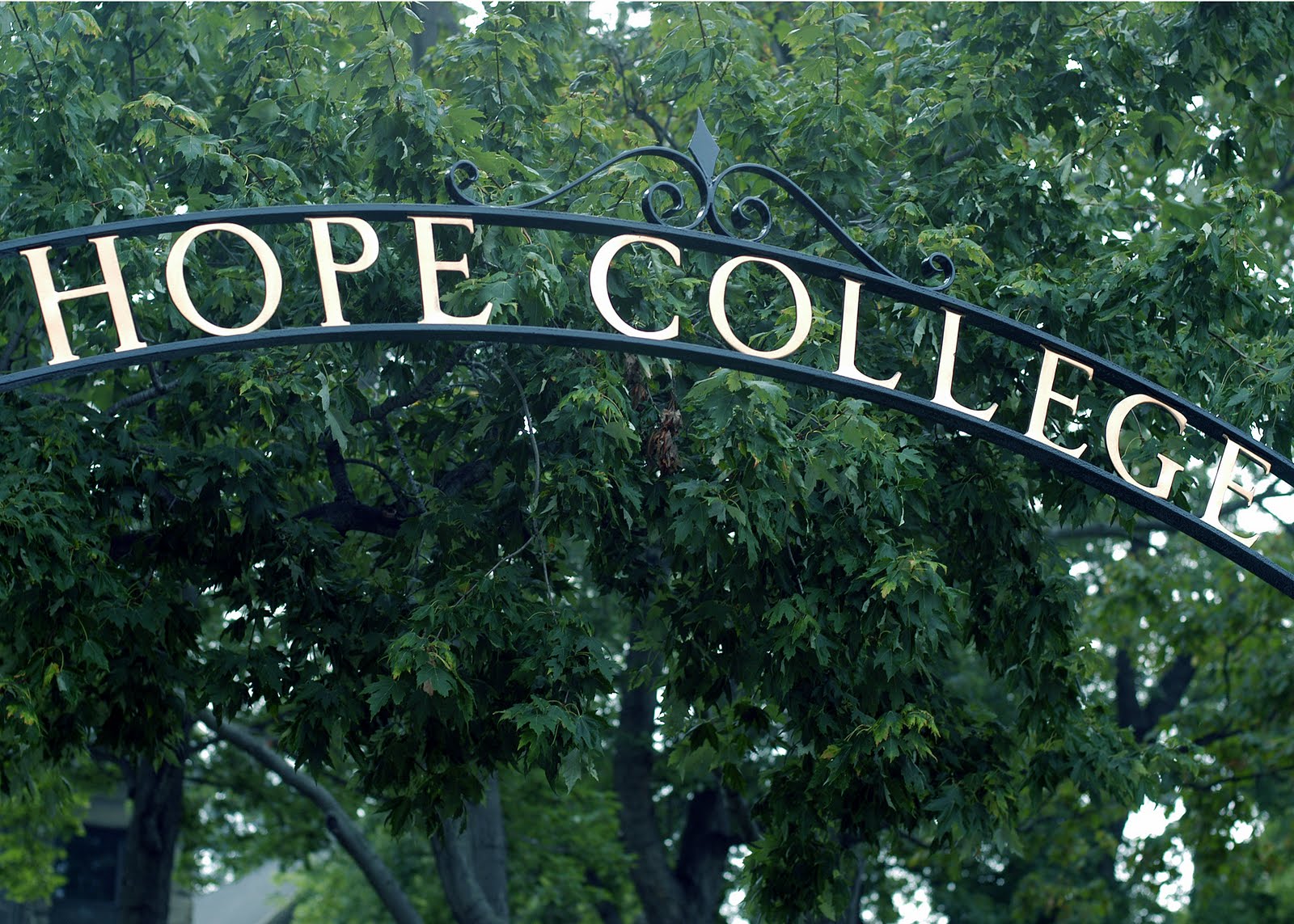
The day before Thanksgiving my husband and I were able to visit the institution where we each got our start in student affairs and where we met and fell in love. The trip provided an opportunity to reflect on all we have been through, professionally and personally.

Residence life at a small, private institution was a great place to start my professional career. It was my first time supervising. I learned how to physically manage a new-construction building and all its idiosyncrasies. I served as a judicial hearing officer for the most “active” residence hall on campus and thus, had the largest caseload of all my colleagues. As a young and energetic professional, I also volunteered for any and all assignments that would give me experiences and skills outside of my functional area. As such, I advised funding board and several student organizations. I can budget with the best of them. Because of these experiences I was able to transition to student activities| leadership when I moved to my second professional position. For three years, I worked long and hard hours. I said yes, a lot. I created new programs and events and I took risks.

In the span of a career, three years isn’t that much. But it’s not nothing. Visiting the institution where I got my start reminded me of all of these things. It was wonderful to visit with colleagues and mentors and to chat with the VP| Dean who saw something in me and offered me that first job. I think too often in my work, I am so focused on the next step, the next move, that I underestimate what it took to get where I am today. I would guess that I am not alone in this. Life’s messages seem to be telling us that more is better, that to strive for something different or higher or more prestigious is “the” way to be. It is good to have goals. But, in working towards those goals, I think it’s important to take the time to reflect on where I’ve been.

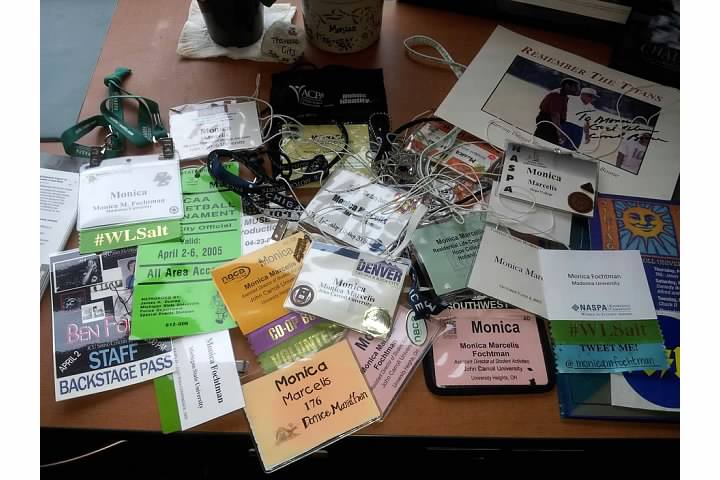
Nice to meet you! Name tags & lanyards from a career well-lived

We all have beginnings. I am grateful that my beginning in this profession was a good one. I look back at that time fondly and with gratitude. I would love to hear about your beginnings. Where did you start? How has that position shaped who you are today?

In the second year of my first professional job I fell in love with a coworker. We worked together, we were both Catholic, and he made me laugh. He still makes me laugh. Every day. Since that first date in September of 2000, we’ve been through a lot. More than most couples our age. We dated for two years while under the microscope of a full-time, live-in position. We survived a long-distance engagement and job search process. We have survived eight job changes, graduate school, unemployment, and parenthood. We shepherded our son through a major health crisis, all while staying married and keeping our younger son healthy and normal.

When we began though, we were young, excited, and full of hope. When you think about it, really, we knew very little about each other. I think this is the case for most people. In the span of a married life, there is no way to predict what will come your way. I certainly never thought that I would mother a child through cancer. The only thing that indicates future behavior is past behavior. I think we are lucky and grateful that our past, our beginning, was a good one. We are loyal, honest and we like being with each other. That’s how we started and that is what we keep working for now.

Driving through the small town where we shopped for a coffee table (that we still have), had our first kiss, first fight, first jobs, first everything reminded me of our sweet beginning.

Hope College, Holland MI

Don’t fear the feedback

On Wednesday night I presented an information session for one of the academic programs that I advise. In attendance at the session was a woman I knew from a previous role. I was perplexed by this as I work in Nursing and she has a Master’s degree in Student Affairs from a well-known and highly reputable program. Nursing would be a big career change. Why was she there?

We chatted a for a bit after the session. She told me that she is unemployed and has been actively searching for almost two years. She is starting to question her choice of graduate school degree and future professional life. My heart aches for her. Like many, I have been unemployed and I remember well the levels of frustration, anxiety, and sometimes even the sense of desperation that can come with the search. I remember feeling as if the interviewer could smell my desperation when I walked into the room. As a candidate, the deck is stacked against you. There are more of you than there are positions open. In many cases, candidates are given little, if any, feedback about their status in a search. And, candidates are given even less feedback about their performance while in the search.

This woman is smart, kind, capable, honest, and committed. I do not know all the details of why she is not being offered positions. Maybe she doesn’t interview well. Maybe she is under/over qualified. Maybe she doesn’t write well. I have offered to meet with her and do some career coaching. I hope to help her in whatever way I can.

Ever since then, I have been thinking about feedback in the student affairs job search process. I asked her if she had asked for feedback and what, if any, she got. To her credit, she has called past interviewers and asked for feedback. That takes guts. To even ask that question takes courage. To actively listen to what someone has to say takes even more courage.

She related to me that the feedback she has gotten thus far was “You were great! You didn’t do anything wrong in the interview.” Oof. Not only is this not true, it is also not helpful. Obviously something is wrong if she has been unemployed this long. And, how will she ever get better as a candidate if no one is taking the time to help her get better?

Feedback is hard to hear. I hate feedback. I hate hearing it. I hate giving it. But, it is a skill that I am learning and constantly trying to work on. Because, in my career I have been very fortunate to have received direct, honest, specific, and constructive feedback from people whom I know and trust. I also understand how hard it is to give feedback. So, when I get it, I try really hard to listen because I appreciate the time and energy that went into that conversation. I have also seen the impact that feedback has had on my own staffs.

In student affairs, we are quick to praise our colleagues and supervisees. We tweet it, we nominate them for awards, we serve as references. But, when it comes to the tough, icky, uncomfortable stuff, we speak in generalities and niceties that, in the end, mean very little. If all you are ever told is that “it wasn’t you” then how will you ever grow, learn, change, or get better?

Feedback makes us all better. It makes us more self-aware. It makes us slow down. It is helpful to others’ growth and development. It clears the air. It improves communication between individuals and across teams.

Feedback is hard. But the hard stuff is what matters most. That’s where the work really is.

I hope this woman will take me up on my offer to look at her application materials and do a mock interview. If she doesn’t meet with me, I hope she meets with someone who will take the time to genuinely help her, not sweep the feedback under the rug.


Self-advocacy

I have been a certified administrator of the Myers Briggs Type Indicator (MBTI) since 2004. In my professional positions at three different institutions, I have presented multiple “Type” workshops to students, faculty, and staff. I have made the mistake of doing these sessions out of the goodness of my heart and my desire to be a helpful, collaborative professional.

This summer, my colleague asked if I would facilitate the MBTI for incoming doctoral students. As part of her ask, she asked me what my fee was. I said something like, “oh no, that’s okay. You don’t have to pay me.” To which she said, “No, this is an expertise that you have and you should be paid for it.” I was totally blown away. Gosh darn it! She’s right! I do have this expertise, a lot of practical experience, and a terminal degree which lends credibility to my role as expert. We plowed ahead with the proposal to pay me for my time. Both departments running the Orientation agreed to split the fee and my supervisor gave the go-ahead. Yeah! I was going to get paid for my expertise. For the first time.

I prepped. I prepped at home. I revised slides. I practiced. Then, I did it. And it was great. I love the MBTI. I love helping people find their best fit type and then help them use what they learned to be better communicators, team players, and students.

And then, they didn’t pay me. As the request made it up the channels of paperwork, word came back down to me that they were not going to compensate me. Me doing all that prep work and those two sessions (one of which was on my day off) were part of the “Monica” package that I brought to the table.

I was crushed. I am sure I pouted. As a new professional and even just a few years ago, I think I would have pouted for a long time and then thrown up my hands and moved along. I would have accepted that this is just how it goes. This time though, something was different. There were voices telling me to keep pushing, to stand up for myself, to ask. The literature (and my own experience and my observations of others) are constantly revealing that women don’t ask, they don’t negotiate, they wait to be recognized.

For one of the first times I can remember in my professional life, I said, “No. No, this is not okay.” I advocated for myself, my time, my experience, and my expertise. I had provided something and I should be compensated for that. I put together a proposal requesting that I be paid for my time. And, it worked. I advocated for myself and it worked!

This experience marks a turning point of sorts for me. I learned some very important professional and personal lessons:

  1. I have to ask. I have to ask for what I need and deserve and be firm in getting it.
  2. I learned that self advocacy is a skill that takes confidence and practice.
  3. I am grateful for my colleague who suggested that I be paid in the first place.
  4. I am grateful for my supervisor who was willing to take a creative but fair proposal back to the powers that be and advocate for me.
  5. It helps to have allies.
  6. There are women out there who will support and cheer for other women. I am grateful for those women. I hope to continue to be one of those women for others.
  7. As a Mid-Career professional one of my professional responsibilities is to help younger professionals, especially women, learn how to advocate for themselves.
  8. Get compensation agreements in writing.
  9. Get a deposit up-front.
  10. No more free MBTI sessions.

Are you advocating for yourself and being compensated (however you define it) for the unique gifts and skills you bring to the table? Psst…You are worth every penny!

It’s okay that it’s hard

I have written very little on this blog about my work in higher eduction and academic advising. I think this is mostly because I fear being honest in such a public forum. In my personal and professional experiences, I have found that really, really honest people such as myself are usually labeled as negative, or nay-sayers, or resistant to change, or blockers. Or, I think people are going to ask, “why do you do what you do if you don’t like it?” Or, they have actually said that to me.

I am reading Glennon Melton’s book, Carry On, Warrior. I cannot put it down. Yesterday, I read this gem:

“I love having written. And I love having parented. My favorite part of each day is when the kids are put to bed and Craig and I sink into the couch to watch some quality TV, like Wife Swap and congratulate each other on a job well done. Or a job done, at least.

Every time I write something like this, readers suggest that I’m being negative. I have received this particular message four or five times: G, if you can’t handle the three you have, why do you want a fourth? That one always stings, and I don’t think it’s quite fair. Parenting is hard. Just like lots of important jobs are hard. Why is that the second a mother admits that it’s hard, people feel the need to suggest that maybe she’s not doing it right? Or that she certainly shouldn’t add more to her load. Maybe the fact that it’s so hard means she IS doing right, in her own way, and she happens to be honest.”

(Melton, 2013, p. 113)

BAM! YES! I totally and completely agree with everything she writes about parenthood in this passage. And, all I have to do is substitute “student affairs” or “higher education” or “academic advising” or “being a working parent” for “parenting” and it describes most of what I have been feeling as a professional.

I don’t particularly get my students right now. They are frustrating to me. I think it is completely inappropriate that they come to appointments with me totally unprepared.”Tell me about your program” they say. So, I smile, launch into my spiel and do my job. But on the inside, I am saying to myself, “That’s not a question. Please come back when you are really ready for this meeting.”

Or, they are so prepared that all they do is recite the website back to me and then ask me if the content of the website is true. Seriously? Like I have the time, energy, or forethought to make stuff up on our website because I want to trick you and make more work for myself. I am not quite sure what all that is about. I am constantly evaluating and thinking about that. Generational differences? I have unrealistic expectations of student behavior? All of the above? None of the above?

I think right now my job is hard because I am not saying everything I think. I am not being honest. I am biting my tongue so hard I am surprised it hasn’t fallen off. Somehow in this profession, honest got translated as mean and being developmental means treating students like Faberge eggs. And, my frustration is that in student affairs I perceive that there is pressure to looooooooove what you do, all the time, all day every day.
Via Twitter and Facebook and professional organizations, I am constantly barraged with messages that professional frustration equates to unprofessionalism or lack of fit. I wonder if I am alone in this? I wonder if my colleagues- especially my fellow working-parent, mid-career, dual-career couple colleagues- feel the same way?

I would love to hear from you. What are your experiences with your job? Are you frustrated? It’s okay if you are. It’s okay if you aren’t. Are you allowing yourself to feel that way? Why or why not? Reading about another mother’s experience gave me space to confess that right now, it’s hard. It’s okay that it’s hard. It wasn’t always this way. It won’t stay this way.

The post I didn’t mean to write, but needed to

I intended to post a picture of the cucumbers and beans that my son & husband harvested from our garden yesterday. Then, I was going to say something cute like, “lesson learned, never give up!” Then, the hypocrisy of that post stopped me and I wrote this one instead. I had nothing to do with the garden. But, I have everything to do with this. So here it is.

“It only takes one person to change your life: You.”

“Tips for a powerful brand”

“Realize your full talent potential!”

“I just posted a ______ mile run with Map My Run!”

“I worked out this morning!”

“I nailed a run. #beastmode”

“You can be anything you want, you just have to choose.”

“Believe you can do anything at least once a day.”

As someone who wrestles with anxiety and depression, these incessant messages feel like I am being pelted with… criticism. It feels like noise. Blah, blah, blah. Talking heads with really long skinny fingers pointing at me. “You are not enough. You should be doing more.” Noise, noise, noise. The messages make me jealous, more anxious, and paralyzed by the fear of doing something wrong, trapped by perfectionism.

I haven’t blogged in too long and I have yet to make significant progress on my journal article.

I feel ashamed that I have fallen off the exercise wagon and yet to get back on. I can’t remember the last time I went for a run. I did a few 5Ks in early spring. I even ran in the mornings for about two weeks. I went running on vacation?! Then, I got sick and I stopped. Although my cold is gone, I have not fully recovered.

I know that people who tweet and post encouraging messages don’t know that I feel this way. I also know that the intent of these messages is not to make anyone feel bad or to shame anyone into exercising, or writing, or updating their LinkedIn profile. If anything, these posts serve to encourage others. And they do. I have witnessed many friends get on the exercise bandwagon, update resumes, add skills to their profiles, etc., etc., etc. And sometimes, they encourage me, too. And other times, these overtly positive messages feel threatening.

The thing with depression too is that it makes me lose sight of what I have accomplished. This weekend, I did six loads of laundry; went shopping for home décor; then came home and fixed an old nightstand with a new knob and picture frames; put my son’s artwork into a new frame and hung it in the living room; and painted an entryway in our house with a spiritual saying, with a stone cross in the middle of it (take THAT Pinterest! I came up with that idea all on my own!). Not bad! And, I did it all by myself. Doing this alone is also a huge feat for me, as my anxiety can sometimes make being alone feel like loneliness.

But, I didn’t go running. I didn’t exercise once all weekend. I didn’t call my grandmother. I texted my sister on her birthday instead of calling her. I didn’t, I didn’t. I didn’t…..Noise. Noise. Noise.

It’s not that I don’t want to work out, or write thank you notes, or clean my house. It’s not that I can’t.

It’s that the cycle of inertia, shame, and more inertia fueled by that shame, is really, really hard to break. Hitting the reset button is necessary. I know that I need to. I know that I want to. It’s just that taking the first step to actually doing it feels momentous.

This is part of me that I never knew before; I have only recently learned that how I feel had a name. Truth is, I have always wrestled with these issues. Looking back on my late 20s and early 30s, I can now see patterns of behavior. Periods of incredible activity and productivity, followed or proceeded by valleys of exhaustion and inactivity. When in the valley of depression it feels as if everything is fuzzy, like someone is shouting at me but I am under water. I can see and hear them and I want to claw my way out and break the surface but, I end up treading water instead.

I even have dreams about my depression. In my dreams, I have been wronged, shamed, or thrown under the bus by someone, almost always in a public setting. I try to speak up for myself and I open my mouth, but nothing comes out. I am shouting inside my head but, only I can hear it. The people around me are staring at me. This leads to more and more frustration and more shouting, but no results.

I also dream that I am running but nothing ever happens. My legs get shorter and my abdomen collapses like an accordion and I get physically smaller. Then, my legs start to sink into the pavement and I am no longer running, just staying in one place. Interesting that my dreams are about running. Huh.

I read once that the author J.K. Rowling struggles with depression and that the dementors in Harry Potter are her version of that struggle. This is the best image I can think of to represent depression and it’s after effects. I can feel its presence, its cold breath on my neck. There are times when I can swallow the doubts and fears, choke them back like gravel in my throat. And then, there are other times when I must embrace the darkness. Let its waves crash over me and run their course. Then, I will rise up again. Battered and bruised, but still here.

I am absolutely terrified to post this. I fear what you will think. But, I am choosing #optimism and doing it anyway.

I am learning that none of this makes me weak. This does not make me less-than. Some days are easier than others.By being vulnerable about my imperfections, my crosses, I can name them, address them, and even embrace them without shame because they make me who I am.

Own it

I recently attended the NASPA region 4E Women In Student Affairs (WISA) bi-annual drive-in conference. Before the conference, at the conference, and post-conference many of the participants were tweeting and talking about Daring Greatly by Brene Brown and Lean In by Sheryl Sandberg.

In my post-conference euphoria- you know that feeling. You go back to your job inspired and revved up to change the world- I purchased both of these books and started reading away. I drank the Kool-aid and I am so grateful I did. I read Daring Greatly while on vacation. I could not put it down. I finished Lean In about two weeks ago. I strongly suggest that anyone, woman or man, who is looking to know herself better and become an even stronger leader read both of these books. You will not regret it.

Dr. Peggy Burke of DePaul University gave an amazing and inspiring keynote presentation centered around both of these books and the idea of “owning it.” In short, women leaders often sabotage themselves by not owning their own accomplishments. We are socialized to be polite, team players who demure in the spotlight. We give credit to others for our accomplishments because taking credit is boastful or worse, bitchy.

Hearing this was like being hit upside the head with a mallet. This was more than an a-ha moment. This was an “oh my gosh, I have been doing myself a huge disservice and it explains a lot, and I need to stop doing that” moment.

Related to my own completion of my doctorate degree, I have done this for the last three years. Heck, I did it that morning at the conference! I was sitting at a table of colleagues and got chatting with the woman next to me. We shared that we are both moms, mid-career, etc. etc. She told me that is she beginning her doctoral work this fall and then she asked me, “how did you do it?” And the first words out of my mouth were, “I had help. I had an amazing partner who took on a lot…..My kids were great sleepers….I had a graduate assistantship that covered some tuition…..” All of which are completely true. And, part of the answer.

The problem is, I have let all those explanations become the answer rather than just part of it. There are many reasons for this, I am sure. I am still figuring those out. But, I am now on a personal and professional mission to claim my accomplishments, to profess them openly without boasting or bragging, and to actively encourage other women to do the same. I have a lot to contribute to whatever environment I choose to be in. And, so do you. So own it!

So, Monica. Question: “how did you finish your doctorate degree in five years, while maintaining part-time employment, have two children, shepherd one of those children through a life-threatening illness, and stay married?”

Answers:

I worked my tail off.

I had a singular, laser-like focus for five years.

I established a reading, writing, and dissertating schedule that I protected as sacred.

I am a strong writer.

I love to read and be in a classroom of fellow learners.

I was never going to allow my life circumstances to become an excuse for not finishing.

I owed it to myself to finish what I started.

I am not a quitter.

Those PhD robes are classy and I wanted them.

Once earned, an education can never be taken away from you. I earned mine. I had help. Lots of it. But I went to class, I did the work, it’s my name on that diploma. So, I am owning it.

What areas of your life do you need to own? Are there other leaders in your circle who should be encouraged to do the same? I would love to share “owning it” stories with you. Let’s connect!

Seeing with new eyes

Part I

Tuesday was the first day that I was required to work at the University’s summer orientation program for new students. In the afternoon, we help students put together their first-year schedules. As an academic advisor, this is my job and about 85% of the time I love it. Orientation is a different beast on multiple levels. First, the students are overwhelmed and in a post-lunch food coma. Second, the room is very warm, thus adding to the sleepiness. Third and most challenging, the range of student experiences, preparation, attitude, and willingness to listen is drastic. In 60 minutes, I advised 1. an Honors College student who had enough AP credits to make her a sophomore; 2. a young man who was pre-enrolled in all of his courses and all of them were right (!); and 3. a young woman who was required by the University to take developmental writing and math, yet who was in complete denial about her ability to handle college-level Chemistry and fought us on her schedule. I do not offer this as complaint. I can’t stand whiners. I offer it as context for the layered complexity of advising work and the challenge of dealing with unknowns. At summer orientation, you never know what is going to walk in the door and end up sitting across from you. For me, this is both stimulating and a little overwhelming.

I came home on the overwhelmed side. I just could not understand (or accept) how in 2013 a student graduated from high school not being able to do math or write at a pre-college level. What do students learn in high school? What don’t they learn? Whose responsibility is it to teach them? Why don’t students take more ownership of their experiences? How can young people the same age, from the same state, in the same year, come to college at completely different levels? What were the social, economic, political, racial, and geographic factors that impacted their experiences, their level of exposure to higher education?

I felt sad. Sad for my student, that she has such a hard climb ahead of her. And a little sad for and disappointed in myself because I am not sure that in our 20 minute interaction, all that much was accomplished. How can one or two interactions with me and my colleagues possibly undo all that she has learned (or not) in the last 18 years?

Part II

After dinner, I took L to his baseball game. In my recent efforts to spend less time on Facebook and on my phone, I brought along a magazine that I then proceeded to leave on the front seat of my car. Instead of feeling sorry for myself for forgetting my magazine and about my self-imposed Facebook hiatus, I sat and listened. Because I wasn’t distracting myself with technology, I was able to really see all the things that were happening around me. I didn’t just look at them with my eyes, I felt them with my mind, my heart, my soul. At an elementary school baseball field, in a medium sized MidWestern, University town, I observed…

A man in a wheelchair arrived to the game with his two sons. The boys were on scooters a few feet in front of him. Before they ran out to meet their teammates, the dad called them over, gave them their hats, wiped his shirt with his tongue and cleaned smudges off their faces. It was such a tender moment of kind parenting.

Four sets of grandparents there to cheer on their grandchildren. They were all married. They were holding hands. One of the sets of grandparents lives with the parents of one of my son’s teammates. The way they laughed together, the knowing way they touched each others’ arms, hands, faces, was so moving to me.

There was also a bi-racial couple there; their older son was on the other team. When the dad arrived to the game, the younger boy shouted, “Dad!” And then bolted off his mom’s lap and ran full speed to meet him. Then the Dad went over to the bench and said hi to every kid on his son’s team. Every one. Then he greeted all the parents with a huge smile, handshake, pat on the back. And he was so…happy. You could not see this man and not smile yourself.

And, on the other team, there was a young boy with Down Syndrome. I will confess that when I saw him and his mother approach the field, I was nervous. With so much talk about bullying and kids being cruel to other kids, I was nervous. Would anyone on my son’s team, or my own son, say something mean or inappropriate? What would the behavior and attitude of the coaches be? His coaches and teammates did not treat him different than any other player. He participated fully in every part of the game. What a gift it was to watch this young man play. And what a gift it was to the young players out there- and to me- that his teammates and coaches treated him with the dignity and respect that he deserves.

All of this sounds like a scene from a bad Hallmark movie. But, it’s true. Perhaps the diverse community that I witnessed has nothing to do with my experience earlier that day. Maybe though, it has everything to do with it. As a person of faith, I believe that the Spirit was tapping me on the shoulder and giving me the grace to see with new, grateful eyes. I was sitting there thinking, “Wow. This is so cool! THIS is where I choose to live and work. All of these wonderful students, people, families, communities, and possibilities are right here. Right in front of my eyes.”

If I had been on my phone or reading, I would have missed all the good things and people that were happening on the baseball field. Earlier that day, I was focused on the wrong things in my interactions with my student and I missed the point. The questions I need to ask are not about her and her past experience, which were beyond her control on some level. The better questions to ask are about me and how I could have seen the situation with different eyes. What could I have done differently? Could I have been a stronger touchstone for this young woman? Although her facade said one thing, underneath she was probably very overwhelmed and confused.

I am going to work to see my students with new eyes. I don’t have to go to orientation. I get to meet a new group of students and help them. I may not be able to change the system they came from, but I can help them navigate the one they are entering.

Each day is a chance to see with new eyes. What are the areas of your life and work that need a new perspective? What will you do today, tomorrow, next week to see with new and grateful eyes?

Self-preservation!

#ReverbBroads2012 prompt from June 7
List 8 reasons it’s okay to lie.
Katrina

1. If it preserves my personal parenting sanity. Example: Oldest is playing with whistle that sounds like a high-pitched train horn AND it lights up. I say, “that is an outside toy.” What I really mean is, “for the love of all that is good and holy get that thing away from me or I am going to lose it!” BTW, still trying to find the person who decided that said whistle was a good idea.

2. If it buys me decision-making time. Example: Boys are fighting. I only heard half the story. Child one approaches me and whines (we all know how I feel about whining!). I re-direct him to sibling. “Talk to him about it!” Truth: I have no idea what happened, or what to do about it.

3. If it keeps my children from worrying. Example: one Christmas, our little family of 4 was almost stranded in a flash blizzard on the Ohio turnpike. We were driving along just fine. The snow falling was actually quite pretty. We had to slow down, but nothing too drastic. Then, bam! Wind whipping, snow swirling everywhere, no cell phone signal, can’t see the car in front of you, white-knuckle driving. We pulled off at the next exit, which thankfully had some motels, one of which had a room and all you can eat breakfast! Boys half sleeping/half awake, in jammies and winter coats in the backseat asking, “Why are we pulling over, Daddy?” Answer: “We’re really tired and it is dark, so we are going to sleep here tonight.” Truth? “I am absolutely terrified that we are going to end up in a snow bank, so we’re getting out of here!” See? Why make them worry?

4. If it keeps my children safe from strangers, danger, or fear. Nuff said.

5. If it prolongs my children’s innocence. Our oldest is 6.5 years old. He turned 6.5  yesterday. When you are that little, that extra half is a big deal! Pretty soon he will no longer believe in Santa, the tooth fairy, etc. etc. The day of discovery is coming like a freight train and it makes me sad. As soon as he figures it out, little brother (now 4) will inevitably learn the truth,too. That’s what older brothers do, right? I remember my older brother showing me the stash in my mother’s shower. Why rob them of the innocence? Why steal the mystery, the anticipation? They will figure it out soon enough.

6. If my answer (the lie) saves me from entering into the Mommy Wars, again. In my experience, when other mothers ask questions about breastfeeding, naps, sleep training, solid foods, school, summer vacations, sports, blah blah…..they don’t really want my real opinion. I know I don’t when I ask. They want my support. So I give it. “Yes! Totally normal!” “Oooh, great idea!” They want to be reassured that they are not totally crazy (not totally, just partially like the rest of us) and that they are doing right by their children (They are. We all are.) Lying? Yep. Deceitful with intention to harm? Never.

7. If my answer helps me save face with colleagues and supervisors. Example: “Yes, I read that message. My response is in my email draft folder!” Truth: make short-hand note to self on meeting agenda, scurry back to office, find said note, decipher it’s meaning, read aforementioned email message, reply all with smiley face at end. Wipe sweat from brow. This answer is very un-professional and very un-student affairs-like. But I don’t care (lie).

8. I can’t possibly think of another reason. Actually, this is true. I am drawing a complete blank. I am sure that I will come up with more after I publish this post and read all of the other witty, insightful, and honest Broads’ stuff!